Showing posts with label Perfume Recommendations. Show all posts

Sunday, March 20, 2016

What's That Smell? TONKA

In the "What's That Smell?" series,  I'll explain some of the less obvious perfume notes that crop up in many indie perfumes. Keep in mind my descriptions and comparisons are based on my own experiences and your impressions may not be the same. Perfume notes are NOT ingredients. They can be natural essences, artificial isolated compounds that imitate the natural substance, blended accords, or a combination. Therefore, the note you like in one perfume may be unrecognizable in another. As with all sensory, subjective things, your mileage may vary.


Tonka is a tropical plant that yields beans, like cacao or vanilla. Its beans have a sweet, smooth scent reminiscent of vanilla. The characteristic smell comes from a chemical isolate contained in the bean called "coumarin." Coumarin can be described as sweet, powdery, and it's a very versatile perfume note, though it's commonly associated with Oriental fragrances.

Tonka is not 1 for 1 a vanilla note, although it can be used to deepen, complete, or enhance vanilla notes. To me, tonka has a slightly less "foodie" feel than vanilla, although it was used in edible recipes for hundreds of years. I say this because vanilla notes in perfumes are usually sugary to the point where they're inextricable from their gourmand associations. But tonka (in general) has a slightly more neutral tone, more like spice or a nutty smell than the rich, creamy sweetness of vanilla. I would describe it as having the lightness and inoffensiveness of vanilla, with nuances of raw almond and something like nutmeg. This is not an overwhelmingly spicy note, but it has the natural spicy feel of fresh mown hay (also associated with the coumarin scent compound) or dry, split wood.

Tonka can be used to add sweetness and smoothness where vanilla would be too "obvious" or too jarring. It works as a natural partner with deeper wood and spice notes. It can be a great companion to fresh or green notes, which need depth and richness without added sugariness. It adds another layer of depth and interest to a fragrance with multiple gourmand notes, especially ones that already contain vanilla.

Perfumes featuring tonka:

  • Alkemia Trick or Treat: This is an example where tonka adds more depth and spiciness without tipping the character of this already-sweet scent into cloying territory. In fact, the tonka works with both the candied fruit and vanilla notes and the earthier patchouli and wood notes to marry them without contributing more to one side or the other. The result is a balanced perfume that's both masculine and feminine, sweet and earthy. 
  • Solstice Scents Cameo: This perfume is unapologetically gourmand and sweet. It has fruity-floral, almond, and cake notes, but the tonka does double duty here. It completes the yellow cake note, giving it a realistic earthy toothsome feel (if you've had yellow cake, you'll know it's heartier and richer than white cake), but it also grounds the whole scent so that it doesn't float off into powdery sugary fantasyland, where too many badly-formulated gourmands end up. This scent may be entirely foodie, but the earthy tonka makes it both realistic and complex enough to smell all day long without feeling sick.
  • Sixteen92 Grimm: While this scent features chocolate, it couldn't really be classified as a gourmand. This perfume is more of a wet, damp green scent, where the chocolate and tonka are earthy modifiers that create a pleasant dirty scent. Here, vanilla would be too obvious and smell like a cupcake dropped in a forest clearing. Tonka is sweet enough to keep the chocolate company, dark and earthy enough to balance the wet and fresh notes. 

Saturday, January 30, 2016

What's That Smell? BENZOIN

In the "What's That Smell?" series,  I'll explain some of the less obvious perfume notes that crop up in many indie perfumes. Keep in mind my descriptions and comparisons are based on my own experiences and your impressions may not be the same. Perfume notes are NOT ingredients. They can be natural essences, artificial isolated compounds that imitate the natural substance, blended accords, or a combination. Therefore, the note you like in one perfume may be unrecognizable in another. As with all sensory, subjective things, your mileage may vary.


Benzoin is another trusty tree resin (where would perfumery be if tree resins weren't a thing, man?) which has an incredible effect on blends. In its natural form, it's a very thick, viscous resin (it's not pourable at room temp) and it has a light sweetness but is a powerful fixative/base note for any formulation. It's reminiscent of vanilla, but without that characteristic rich, vanilla...thing. To me, it adds a roundness, a sweetness, without actually adding to any sugary or food aspects of a scents. I love benzoin in combination with sweeter scents, because it supervises and herds those flightier notes, complements them, but doesn't add to the mix or make it cloying. 

To me, it is the gentlest and most easy-to-like of all the popular perfume resin notes. It has no characteristic OOMPH or power where you smell it and immediately go, "Yup that's benzoin for ya!" Instead, it has a silky, soft, wraparound quality where it transforms in any scent to add a hint of smoothness that binds all the notes together in an unobtrusive way. If you like lighter amber notes, you will probably also love benzoin. If you like gourmands, but find they get too sticky, look for something with benzoin notes to lend sweetness without being overpowering. If I had to distill it into a few words: it's vanilla without the rich foodieness, and it's a less-sweet version of sugar.

Perfumes featuring benzoin:

  • Cocoa Pink Vintage Halloween: In this blend, the benzoin serves to add sweetness and softness to the bright, herbaceous green and ozone/air notes. Benzoin is doing an excellent job of balancing the richness of the vanilla notes so that this doesn't become a BAM vanilla scent.
  • NAVA Bastet Amber: This is a classic "skin scent," which gives you an aura of something without explicitly smelling like perfume. The amber and benzoin are both at their lightest, sweetest, and most lingering. You basically can't smell this if you sniff your wrist, but you will find it in the air around you for hours after you apply it.
  • Sixteen92 Paper Moon: Peachy vanilla floral could easily turn little-girlish and body-spray like. However, in this blend, benzoin adds a resinous anchor note that plays nice with the lighthearted top notes without joining them. It basically supervises them to keep them from being cloying.


    Wednesday, January 20, 2016

    What's That Smell? TUBEROSE

    In the "What's That Smell?" series,  I'll explain some of the less obvious perfume notes that crop up in many indie perfumes. Keep in mind my descriptions and comparisons are based on my own experiences and your impressions may not be the same. Perfume notes are NOT ingredients. They can be natural essences, artificial isolated compounds that imitate the natural substance, blended accords, or a combination. Therefore, the note you like in one perfume may be unrecognizable in another. As with all sensory, subjective things, your mileage may vary.


    Tuberose is the Big Mama of white floral notes. It's bold and distinctive. In large amounts, it can really take over a fragrance, but in small amounts it can lend a nice depth without killing the vibe. Tuberose can only be described as waxy, fatty, and lactonic (creamy, milk-like.) If you imagine crushing the petals in your hands, instead of getting a juicy, fresh fragrance, you'd get a rich and creamy type of scent. And actually, tuberose smells almost salty in large amounts. It's pretty much the flower version of coconut milk. It's dense, rich, and not sweet exactly, but very powerful. It smells distinctively tropical and summery. If I had to break it down into non-hand-wavy adjectives, I would say tuberose smells like a mix of salt, coconut milk, beeswax, a tiny pinch of sugar, and gardenia.

    Some people report that tuberose scents make them nauseous. From my own experience, when my hormones are out of whack, my nose amplifies tuberose's natural saltiness and I end up with a very confused and upset nose. I think one of the big mistakes people make with tuberose is they expect it to smell like gardenia, which is tuberose's more well-behaved, sweet, prim cousin. If you go into a tuberose fragrance expecting something unusual and bold, you won't be disappointed. It's one of the most unique and characteristic floral notes around.

    I must note, as with all white florals, tuberose does contain indolic nuances (no way around it, indoles smell like feces.) But if you've ever smelled a sexy, dirty human who smelled natural and good, you know that indolic/dirty notes shouldn't be feared. In tiny amounts, they can be a powerfully magnetic scent component, giving you great balance and interest in what could otherwise be a bland scent. The nausea/distaste many people associate with tuberose is, I believe, partially due to its indole content (like with jasmine) and partially because of its distinctive salty-sweetness. 

    Perfumes featuring tuberose
    • Ava Luxe Fleur d'Oranger: This fragrance uses the natural lusty, strong scent of tuberose to anchor the famously fleeting scent of orange blossom. Orange blossoms are technically white florals, but they are some of the hardest to capture in scent form. Many perfumers default to using an orange zest scent in their place, which you know, if you've ever smelled a real orange tree in bloom, is no substitute. The indolic, broad tuberose in this provides a booster in longevity and strength for the wimpier orange blossom/neroli notes and allows this perfume to retain its sweet, full scent for longer. 
    • Solstice Scents Nightgown: Oh, Nightgown, you are a polarizing beast. Because this perfume uses sweeter florals like tiare (Tahitian gardenia) and an ultra-luxurious white chocolate/vanilla blend, it both amps up the sweetness of the tuberose, and starts a bit of a messy fight with the natural saltiness of the flower. I have noticed this scent definitely smells funky if I'm not in the right mood/hormonal state to appreciate it. It's a very tenuous/delicate balance of sweet and salty. If you catch it at the right moment, on the right day, in the right season, this scent is one of the most intoxicating, sensuous floral-gourmand blends in existence. Ever had salted caramel? It can go wrong, but it can go SO, SO right.
    • Cocoa Pink Fleurs Siagne: This is a really easy-to-like blend. It's entirely composed of flowers: jasmine, tuberose, rose, and orange blossom, and the more distinctive sweetness of rose and jasmine keep the weirdness of tuberose in check. The orange blossom is the light top note, the rose the rich, pink base, and the tuberose the broad, smooth heart. I love this fragrance because the tuberose, which is such an assertive note, doesn't have to fight for prominence here, and thus it ends up being a very pleasant and tame component. 

    What's That Smell? AMBER

    In the "What's That Smell?" series,  I'll explain some of the less obvious perfume notes that crop up in many indie perfumes. Keep in mind my descriptions and comparisons are based on my own experiences and your impressions may not be the same. Perfume notes are NOT ingredients. They can be natural essences, artificial isolated compounds that imitate the natural substance, blended accords, or a combination. Therefore, the note you like in one perfume may be unrecognizable in another. As with all sensory, subjective things, your mileage may vary.

    Via Flickr
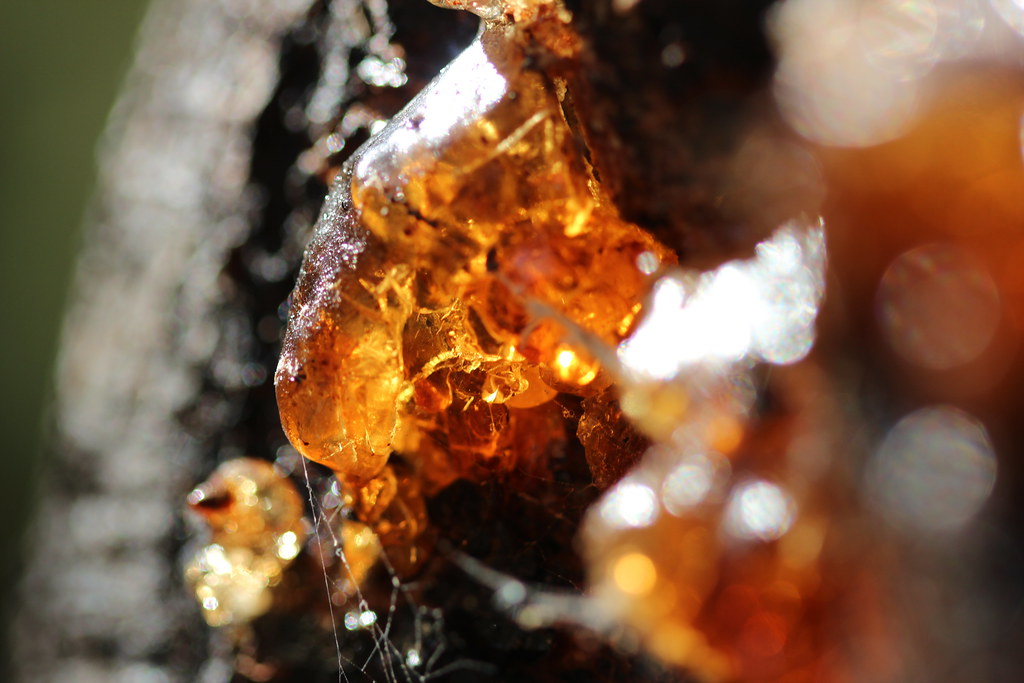
    Amber is one of the hardest notes to encapsulate, because it can represent so many different things in a fragrance. Simply put, amber is a hardened resin produced by trees, and the word "amber" can be used generally the way the word "resin" is. It's not specific to any species of tree or geographical/historical point. It's a mixture of a real thing and a "fantasy" note. It exists both in reality (if not as one specific thing) and in the mind of whoever is creating the perfume.

    Amber almost always smells sweet and rich. It can smell more powdery and dry, with a pale white feel, or it can be drippy and dark like honey. You'll often see it used to sweeten blends where vanilla would be too assertive and musk would be too light. While it's a non-gourmand note (you couldn't eat a chunk of amber) its sweetness works great with foodie notes. Obviously, its origins as a tree resin make it a perfect complement to woodsy notes. When combined with florals, amber adds richness and smoothness without making you think of floral cakes.

    If you see someone refer to White Amber as a note, they are attempting to showcase a pillowy, dry amber that smells like soft powdered sugar and flour mixed with the warm, fresh smell of clean sheets. It's a non-cloying sweet, smooth scent. If you see Golden Amber, Dark Amber, or Black Amber in the notes list, the perfumer is most likely referring to a more syrupy, sticky, honey-like amber note.

    Perfumes featuring amber:
    • Alkemia Carmen 7: A great example of the white amber type of note. The amber is used to create a sweet, but not overly sweet, background for the sugary praline, vanilla, and fruit notes. It maintains the same overall sweet feeling without feeling clunky or out of place, but it doesn't add more sweetness on top, which would take it to a cloying place. You also definitely get the clean-sheet vibe from the amber here, as the overall blend is warm and fresh-smelling at the same time.
    • Arcana Genteel: This amber, described as a "dry amber," sits right between my descriptions of white and dark amber. It reminds me of a beige cashmere blanket, dry, soft, sweet, but neutral. The spice and wood notes in this play very well with the smooth amber, which is a bit dark but not wild and sticky. 
    • Deconstructing Eden Lakshmi: The amber notes in this rose-dominant perfume are used mainly to create a soft, warm bed for the floral notes to float on. You get the impression of pale golden honey, liquid and rich, but not dark/sexy. Neutral and elegant, neither youthful nor mature.
    • NAVA Mists of Arcacia: This scent is gothic, incensey, and woodsy. It uses a blend of cedar and sandalwood as its main notes, and keeps it from being too dark and strong by wrapping the base in blackened amber. Here, the amber serves to sweeten the blend, as it's more rich and honey-like, but the overall scent remains masculine, deep, and mysterious from the dominant wood notes. 

    What's That Smell? VETIVER

    In the "What's That Smell?" series,  I'll explain some of the less obvious perfume notes that crop up in many indie perfumes. Keep in mind my descriptions and comparisons are based on my own experiences and your impressions may not be the same. Perfume notes are NOT ingredients. They can be natural essences, artificial isolated compounds that imitate the natural substance, blended accords, or a combination. Therefore, the note you like in one perfume may be unrecognizable in another. As with all sensory, subjective things, your mileage may vary.


    Vetiver is a grass-like plant that is often used to lend freshness, earthiness, or an overall "green" feel to a perfume. It is a unisex scent, and common in green perfumes that are focused on a plant-like or floral vibe. It can also be used to add surprising depth to sweeter or resinous perfumes, as it has a very natural and easy-to-like scent that is less disruptive or distinctive than something like patchouli. Vetiver is often used in smoky perfumes to evoke the unique mixture of damp heat that comes from a burning wood fire. Because it has a scent profile that straddles the line of light and dark, it stands up to stronger notes like incense and wood without getting lost the way a light floral scent would.

    Vetiver is closest in scent to damp grass mixed with a tiny bit of soil. It's not a sunny, dry grass smell like hay. It definitely has darker earthy nuances, which is why it's such a nice blender for lighter green perfumes. Vetiver is less zesty than the smell of fresh flower stems (which can have a sour, bright smell) and it lacks the sweetness of something like fresh mint leaves. Because it has a soil-like quality, it can also be used to complement or recreate a wet-stone feeling

    Perfumes featuring vetiver:

    • NAVA OM NA: Eternity: The vetiver is not the star player here, but a backup to the sage note. This is sort of a surprising use of the note, because you wouldn't think to mix it with something as sweet and creamy as coconut milk, but it works. It doesn't fight with the more gourmand coconut notes, but it cuts the fatty sweetness and gives a little fresh feeling. It complements the sage, which is another herbal/green smell without overpowering the sage's more distinctive scent. Mixed with the heavy Dragon's Blood, it definitely makes me think of a dark, damp stone temple filled with offerings to the gods.
    • Deconstructing Eden Gentian House: A very masculine and fresh use of the note, this scent features vetiver strongly and uses it excellently as an atmospheric note. Instead of smelling like a handful of plants, the vetiver in Gentian House conjures the image of a house in a field with all the windows and doors thrown open, the scent of wet grass and earth drifting in and purifying the home. The lavender and violets are both herbaceous/green floral scents that complement the vetiver well, and the smoke in here is also a classic pairing. This is probably the most unusual AND harmonious use of vetiver of any perfume in my collection.
    • Long Winter Farm Campfire: This is a standard, but excellent example of how well vetiver works to make smoke notes come alive. You know that smell of the winter air, just after the rain/snow when the whole world is soaked-through, and you can smell everyone's chimneysmoke? That's what vetiver and smoke smell like together. It's one of my all-time favorite IRL scents, and Campfire recreates it spectacularly. No sweetness or florals in here, just a roaring fire in the middle of a damp forest.


    Tuesday, January 19, 2016

    If You Like...Then You May Like...Incense Edition

    In the If You Like...Then You May Like...posts, I'll take a scent category and suggest specific perfumes within that category that certain people might be drawn to. If you usually ignore a certain category because you think you don't like it, you might be surprised! I think there's pretty much something for everyone to be found in each of the perfume families.

    via naturaleinfiniti
    Incense Edition

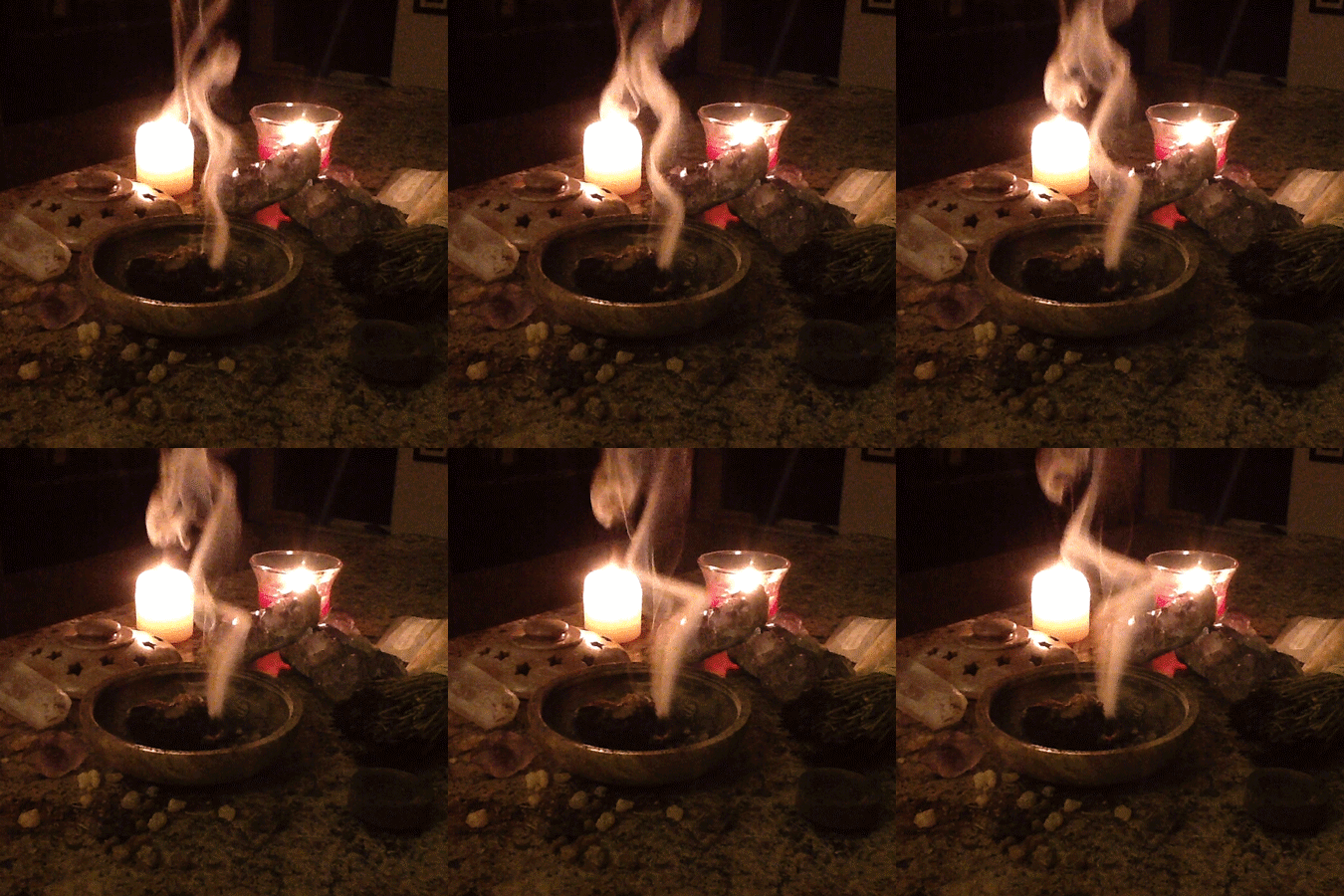
    Incense is a word tossed around by a lot of amateur perfume hobbyists. It can often be found in newcomers' "definitely no" lists, and calls up images of high school bedrooms, head shops, and grandmothers (if you're Asian!) Oftentimes, I'll hear niche/indie perfume newbies complain that "every scent in my order from X shop smelled like incense!!" However, incense perfumes can be incredibly sophisticated, unusual, comforting, or exciting, depending on the blend. There are a thousand ways to describe incense, and even more individual "ingredients" or notes that can make up an incense blend. Some of the more popular ones include frankincense, myrrh, Dragon's Blood, Nag Champa, and amber/resin/wood notes. 

    But incense doesn't smell like just one thing. Even if you consider yourself a lover of, say, only light florals, allowing your nose to experience a variety rich incense scents will allow you to better develop your sense of smell. Scents that all smelled the same to you when you first tried them may smell distinct and amazing after getting used to heavier smells. Incense scents are usually long-lasting as well, due to the heavy nature of the scent components, so if you find perfumes disappear too quickly, consider adding some incense blends to your collection!

    If you like...Orientals, you may like...heavier incense blends containing Dragon's Blood, Nag Champa, and floral notes.

    If you already like classic Orientals like Shalimar, you're in luck because you are already a budding incense-lover! The amber, wood, spice, and subtle floral notes in the Oriental family are commonly found in incense scents, and they make up some of the richest and most luxurious incense perfumes. Incense is probably already in your favorites category, or you just didn't realize you were missing out on something that's right up your alley. 

    Notes to look out for:
    • Oudh
    • Amber
    • Spice
    • Dragon's Blood
    • Nag Champa
    • Jasmine
    • Smoke
    • Myrrh
    • Benzoin
    • Kyphi
    Product Suggestions:
    • NAVA Osirian Purnima Line: One of the most excellent and well-developed incense lines out there in the indie perfume world, this line has a wide variety of incense blends. They all smell distinct from one another, but they share a rich, soft, purring incense accord that is browned, blackened, spicy, and smooth. For a traditional-incense lover, my first pick is OP Anubis, which has a dark, honeyed amber note that wraps sinuously around the incense heart of this perfume. (Note, this is a seasonal collection that has been around for several months. It may return or stay permanent, or it may go away.) Second pick is OP Thoth, which mixes guaiacwood (like a less scary oudh) with kyphi (kyphi is a catchall for ancient incense scents, traditionally Greek or Egyptian) for a spicy, sweet, thick incense smell.
    • Alkemia Hex: Although this only lists a few traditional incense notes, the spice and resin really make this a dark, sweet incense winner. The night-blooming floral notes lend a sweet lightness without taking away from the richness.
    • Arcana Honey and Venom: This is an adventurous pick: the smoky dank oudh will shock you at first, but if you let yourself breathe it in, it blooms into something more complex and enchanting than a typical woodsy scent. The kyphi in this is spicy, heavy, and sweet. This is a blackened, assertive incense scent that develops into the richest, sweetest, warm perfume.
    If you like...fresh scents, you may like...brighter incense blends with notes like frankincense, wood, amber, patchouli, vetiver, and fruit.

    If you consider yourself a lover of fresh/green scents, you may be a fan of unisex/men's fragrances, and you may be a newcomer to the indie scene. Perhaps you're used to the light, citrusy EDPs that a lot of mainstream brands carry. Maybe you think that the most inoffensive, light perfumes are the only ones you can tolerate. In reality, the zestiness and freshness you are used to in your perfumes can be found in incense blends, they are just made deeper and more complex with the addition of darker woodsy and resin notes. Frankincense in particular is a note some people are unfamiliar with, but is one of the best ingredients for green perfume lovers. It's a tree resin, but it smells fresh, piney, zesty, and lemony, rather than the sweet honey you might associate resin scents with.

    Notes to look out for:
    • Frankincense
    • Amber
    • Cedar
    • Teak
    • Sandalwood
    • Patchouli
    • Vetiver
    • Fruit
    • Oudh (used sparingly)
    • Herbs/herbal flowers like lavender
    • Moss
    Product Suggestions:
    • Deconstructing Eden Gentian House: The ultimate fresh/green incense scent. This smells like a witch cleaning her house on a rainy spring day and burning sacred incense. The vetiver and herby floral notes make this scent unisex, fresh, green, but the opium smoke and frankincense make it an unmistakably lovely incense scent. See full review.
    • Deconstructing Eden Black No. 1: This scent utilizes patchouli to its fullest. Patchouli is in the mint family, and is truly not as scary as some people think. It's dark, zesty, a little stinky in an interesting way, and totally complex. In this scent, the patchouli is raw, damp, and makes me think a rainy forest and muddy clearings, mingled with hazy spicy incense smoke. See full review.
    • Haus of Gloi Snow Wolf: The pine-like zestiness of frankincense is on full display here, accented with evergreen notes and anchored by deep, dry cedar. A masculine scent, rich, but cold and fresh at the same time. If you think incense has to smell like fire or smoke, you're missing out! (Note: this scent is seasonally available as a winter/Yule scent.)
    • NAVA Eternal Egypt Anniversary: The most incredible blend of aquatic(!) and resin notes. This is the most indescribably fresh, sexy, and cool-yet-warm scent. Everyone who smells it loves it, and it's especially good for men. It's like if Davidoff Cool Water were sophisticated and interesting (the bookish guy you meet in your lit class vs. the dbag who hits you up over the keg.)
    If you like...fruity or floral scents, you may like...sweet, complex incense blends with notes like rose, jasmine, carnation, amber, myrrh, berries, and vanilla.

    If you're normally a fruity/floral kinda girl/guy, you might share characteristics with people who like fresh/green scents. Either you are sensitive to strong smells, are used to very tame mainstream blends, or just like to smell pretty. Nothing wrong with that! Incense can add something mysterious and nuanced to your favorite floral and fruity notes, though. Berries and dark fruits make a wonderful accent for incense. They're not too light, but they bring some freshness and their juiciness complements the dark nature of incense. Myrrh is a fabulous incense resin that, like its cousin frankincense, doesn't smell like your typical idea of "resin." Far from being a plain woody smell, myrrh has a rich, fruity, sweet honey scent that is dynamite with berries and florals.

    Notes to look out for:
    • Myrrh
    • Amber
    • Jasmine
    • Rose
    • Vanilla
    • Berries
    • Bergamot/citrus
    • Spice
    Product Suggestions:
    • Solstice Scents Thornwood Thicket: This fruity-incense scent mingles dark crushed blackberries with a very rich, dark incense background. The oudh and moss make this a very dark incense scent, but the fresh sweet berries make it more wearable for someone who enjoys fruit scents.
    • Cocoa Pink Spell Caster: The myrrh works exceptionally well with mulberries and amber here. It's syrupy and juicy at the same time, golden and cozy.
    • BPAL The Caterpillar: The rich floral notes in here (carnation, jasmine) mixed with the fresh vetiver and bergamot are a great balance for the heavy incense. You end up with a delightful mix of light and dark, fresh and deep.
    • NAVA OP: Bastet: From the Osirian Purnima line mentioned above, this rose scent is slinky, spicy, sexy, and fruity. It smells like rose petal jam, Turkish Delight, and a whisper of incense in a luxurious, exclusive storefront. 

    If you like...gourmand scents, you may like...sweet, powdery or syrupy incense blends that utilize chocolate, spice, sugar, honey, Nag Champa, and smoke.

    Powdery can be a dirty word in the perfume world. People use it to describe scents that go flat or cloyingly-sweet, and they're often thinking of the ubiquitous, awful baby powder scent. Powdery in this case means something more like the scent/vibe of flour or powdered sugar. Light, fluffy, smooth, soft, and sweet. Nag Champa is a great note to look for if you like gourmands- its soft fluffiness mimics cakey or cookie notes, and it's complemented very nicely by spicy and food notes. Syrupy amber that is more on the honey side (rather than the dry, woodsy side) also does well in this category. You'll find that rich resin notes aren't as different from your comforting bakery scents as you'd think. Note that overt smoke notes do very well in this category because smoke + baked goods mingle in a very natural, harmonious way. Vanilla, obviously, is a stellar partner to any resin or incense/smoke scent.

    Notes to look out for:
      • Amber
      • Copal
      • Honey
      • Kyphi
      • Sugar
      • Vanilla
      • Marshmallow
      • Nag Champa
      • Dragon's Blood
      Product Suggestions:
      • OHWTO Venom: This could be filed under floral as well, but the floral-incense (Nag Champa) is used with the almond-amaretto and it ends up smelling like a powdered, sweet, floral cookie that you're eating, with just the memory of smoke lingering around you.
      • Solstice Scents Foxcroft Fairgrounds: A great intro scent for those who are REALLY shy about incense. The main notes in this are the cotton candy and funnel cake, mingled with a great fresh air note, and a bare wisp of incense. Very easy to wear, great for wetting your whistle on incense scents. Full review here.
      • Solstice Scents Smoky Mountain Mallow: A must-have for anyone who even vaguely enjoys marshmallow scents. This transforms the campfire treat into something more sophisticated and unusual by adding rich smoke, lapsang souchong tea, heaps of resin notes, and a dose of dark wood. Excellent for pushing your gourmand-only tastes further into the dark, complex world of incense perfumes. 
      • NAVA Queen Amber: The honey is the star here, and it's accented by gingerbread-like spices which make this smell cakey, rich, and gooey. You can practically taste the syrup dripping from this, and you can absolutely smell the rich, dark, crumbly incense accompanying it.